The short answer: yes, and it is included
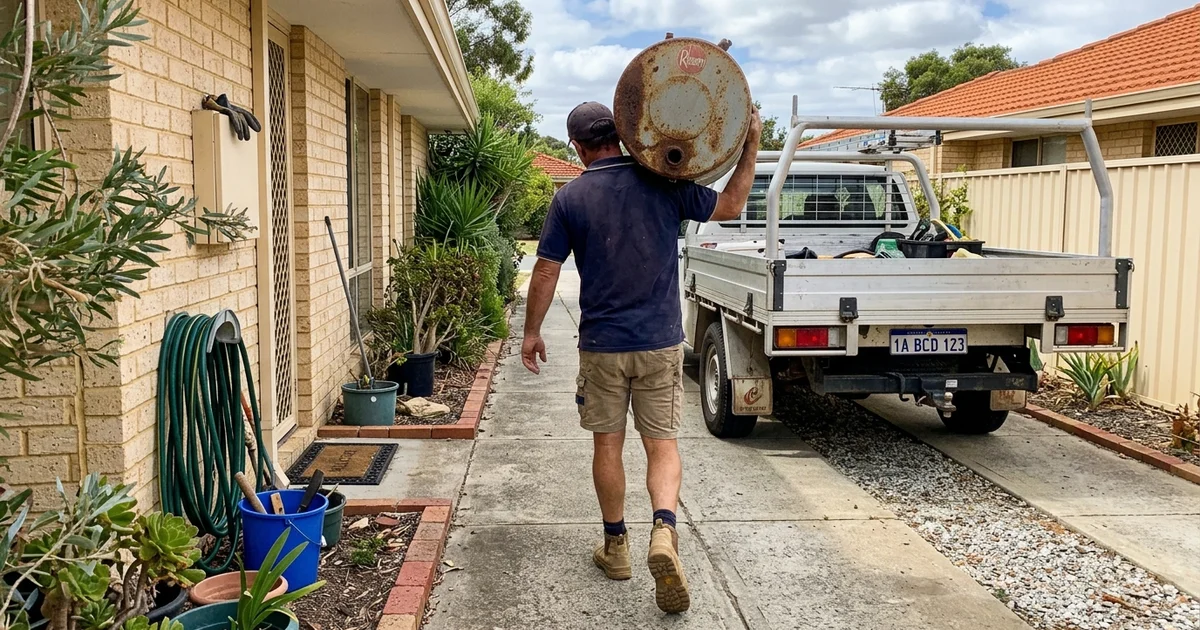
When we install a new hot water system, taking the old one away is part of the job. We drain it, remove it, load it on the ute and send it for metal recycling. There is no separate disposal charge, no skip to hire, and no cylinder left leaning against the side of your house for a fortnight.
This comes up often enough that it deserves its own page, because it is one of the more common places for an unexpected fee to appear on a final invoice. It is one step in the wider process covered in what to expect from a hot water system installation.
Why people ask
A hot water cylinder is an awkward object. A drained 315 litre steel tank is heavy, bulky, usually corroded on the outside, and impossible to fit in a car boot. Your verge collection will generally not take it, and most household waste services will not either, because it is scrap metal rather than general waste.
So if it is not removed as part of the job, you are left arranging a scrap metal drop-off yourself, which means finding a trailer, moving a heavy awkward object twice, and losing a Saturday. That is not a small inconvenience, which is exactly why it should be in the quote rather than a surprise.
How the removal actually works
Isolate and drain. The cold water supply is closed and power or gas isolated. The tank then has to drain through a hose to a suitable point, and a large tank takes a while. This is the step that adds time to the job, particularly on a 315 or 400 litre unit.
Disconnect. Water connections are broken, and gas or electrical disconnected by the appropriate licensed trade. Fittings that are being replaced anyway come off with it.
Carry it out. Perth has a lot of homes with the tank wedged into a narrow side setback, under low eaves, or behind an air conditioner. Getting a cylinder out of those spaces without damaging render, gutters or the neighbour’s fence is its own small skill, and it is why we look at access during the quote rather than on the day.
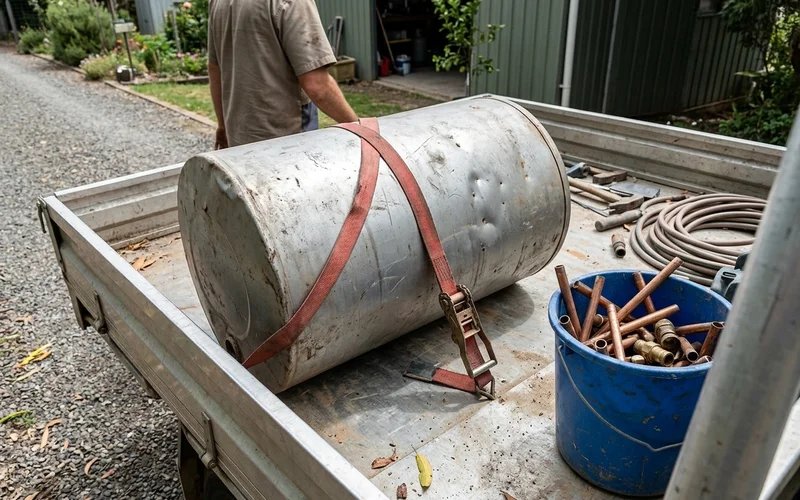
Load and transport. The unit goes on the vehicle, secured properly. It leaves with us when we leave.
Recycle. Cylinders go to metal recycling. A hot water tank is predominantly steel, often with a copper or stainless internal component and some insulation. The great majority of it is recoverable material, which is a much better outcome than landfill.
What else is included in the quote
Disposal is one of several things worth confirming is in a quote rather than assumed. Ours includes:
- The supplied unit, named by brand and model
- All installation labour and materials
- Removal and recycling of the old cylinder
- New isolation valves and flexible connections
- Tempering valve fitted or replaced where required, to meet the 50C delivery limit
- Compliance certification to WA requirements
- The federal STC rebate deducted upfront on eligible heat pump and solar systems
Worth asking any quote you compare
“Does this include removing and disposing of the old unit, new isolation valves, and the tempering valve if it needs replacing?” Those three items account for most of the gap between a quote and a final invoice.
Special cases
Solar systems. A close-coupled solar tank sits on the roof, so removal involves roof access and lowering a heavy object safely. It takes longer and we plan for it, but it is still included.
Systems in confined spaces. Cupboards, roof spaces and tight side setbacks all add time. We identify these at the quote stage so the duration we give you is realistic.
Asbestos-adjacent installations. Older Perth properties occasionally have hot water units mounted against or near asbestos-containing sheeting. We do not disturb it, and where the installation position requires work near it, we will tell you and recommend the correct specialist rather than proceeding.
If you have a system due for replacement, our hot water system installation page covers the full process, or get a free quote and we will price it with the removal already in the number.