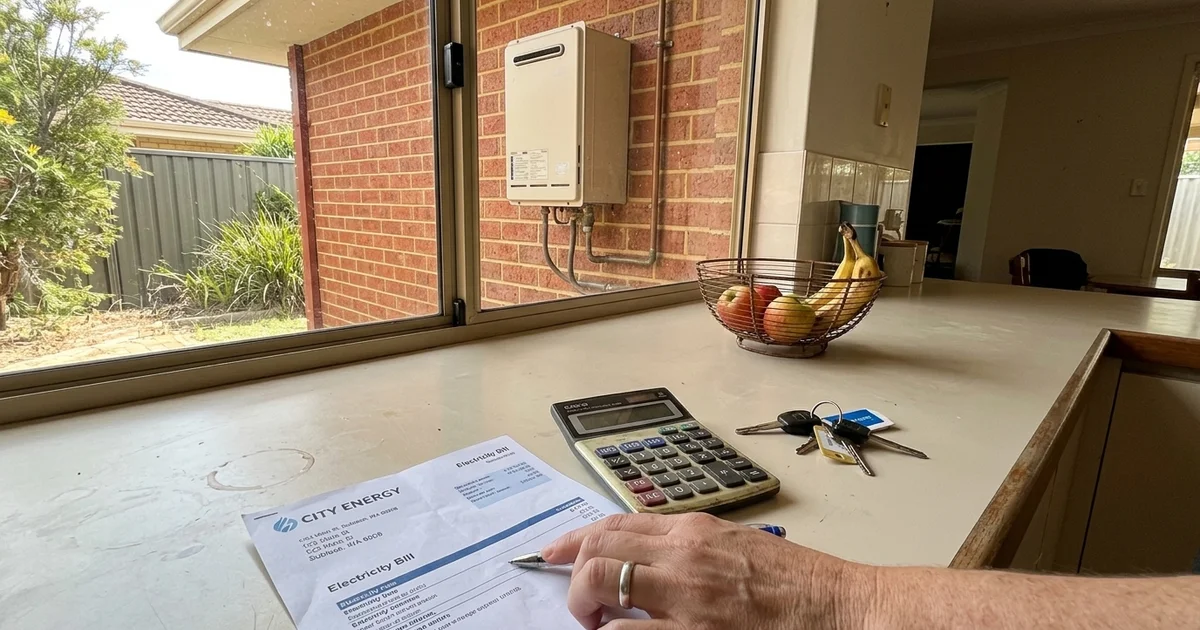
Why running cost deserves more weight than it usually gets
Water heating accounts for roughly 25% of a typical Australian household’s energy bill. It is the second biggest load in most homes after heating and cooling, and unlike those, it runs every single day regardless of season.
A hot water system is a ten to fifteen year purchase. Over that period, the running cost difference between the most and least efficient options comfortably exceeds the difference in purchase price. That makes the sticker price a poor guide to what the system actually costs you, and it is why we raise running cost at every hot water system installation quote rather than just pricing a like-for-like swap.
The comparison, ranked by running cost
Actual dollar figures depend on your tariff, household size and usage pattern, so the useful comparison is relative rather than absolute. If you are still weighing up system types, read how to choose the right hot water system alongside this.
| System | Relative running cost | Why |
|---|---|---|
| Solar with electric booster | Lowest | Most heat comes free from the sun, booster tops up |
| Heat pump | Very low | Uses about a third of the energy of an element |
| Solar with gas booster | Very low | Free solar heat, cheap gas top-up on mains gas |
| Continuous flow gas | Moderate | No standby loss, but every litre is paid-for gas |
| Gas storage | Moderate | Cheap energy, but constant standby loss |
| Electric storage (off-peak) | Moderate | Cheap overnight rate offsets element inefficiency |
| Electric storage (continuous tariff) | Highest | Full-rate electricity plus round-the-clock standby loss |
The gap between the top and bottom of that list is large. A household moving from continuous-tariff electric storage to a heat pump typically cuts the hot water portion of their bill by around two thirds.
Why heat pumps use so much less
A conventional electric element converts electricity into heat at roughly one to one. One unit of electricity produces one unit of heat, and that is the physical ceiling.
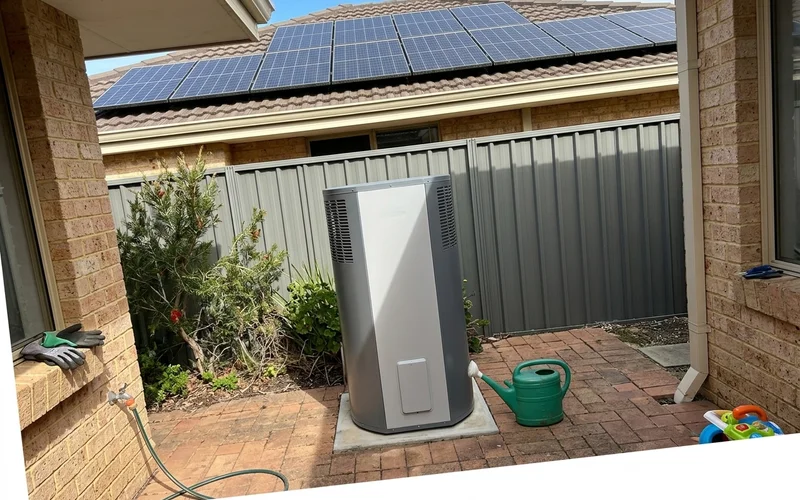
A heat pump does not generate heat, it moves it. A fan draws ambient air across an evaporator, refrigerant absorbs the heat energy already in that air, and a compressor raises it to a useful temperature which is transferred into the water. The measure of this is Coefficient of Performance, and modern units typically achieve three or better. One unit of electricity in, three units of heat out.
That ratio is why a heat pump can deliver the same hot water on roughly a third of the electricity. Perth’s mild climate keeps the CoP high year-round, and units using R290 or CO2 (R744) refrigerant hold their efficiency well on cold mornings.
Solar: free energy, with a caveat
Solar hot water is the cheapest to run where it suits the property, because most of the energy arrives free. Perth’s sun hours are among the best of any Australian capital, which makes it perform here in a way it does not in colder states.
The caveat is boosting. Every solar system has a booster for cloudy stretches and unusually high demand. A gas booster is typically cheaper to run where you have mains gas. An electric booster suits homes without gas and can run on off-peak.
The mistake we see is a booster set to fire too eagerly, which quietly turns an expensive solar system into an ordinary electric one. Correct commissioning matters, and it is worth checking at each service.
Standby loss: the hidden cost of tanks
Any storage system loses heat through the cylinder walls continuously. The insulation slows it, it does not stop it. That means the element or burner cycles on to maintain temperature whether or not anyone has used hot water.
The larger the tank and the higher the thermostat setting, the greater the loss. It is one of the reasons oversizing a tank is not a free safety margin, and one of the genuine advantages of continuous flow gas, which has no standby loss at all.
Upfront versus lifetime: how the numbers stack
Consider a family of four currently on continuous-tariff electric storage.
Option A: like-for-like electric storage. Lowest upfront cost. Highest ongoing cost, every day, for the next decade.
Option B: heat pump. Higher upfront, though the federal STC rebate takes typically $800 to $1,500 or more off at point of sale. Uses roughly a third of the electricity for the same output. On family-sized usage the difference in annual running cost usually recovers the price gap within a few years, and everything after that is saving.
Option C: heat pump with existing rooftop PV. The strongest case of all. Time the heating cycle to run during your generation window and most of the electricity the unit draws is your own rather than purchased. Hot water becomes close to free for much of the year.
Western Australia has no state hot water rebate, so the federal STC is the mechanism that narrows the upfront gap. We create and claim the certificates as part of the job so the discount appears in the quote.
What we would suggest
If you are on electric storage and it is over eight years old, price a heat pump alongside the like-for-like replacement before deciding. The comparison is often closer than people expect on upfront cost, and not close at all on running cost.
If you have unshaded north-facing roof space and no PV occupying it, solar is excellent here. If you have mains gas and high simultaneous demand, continuous flow gas is a sound middle option with no standby losses.
We size and quote all of these across the Perth metro. See our hot water system installation page for what a compliant install includes.