Two ways to heat water with electricity
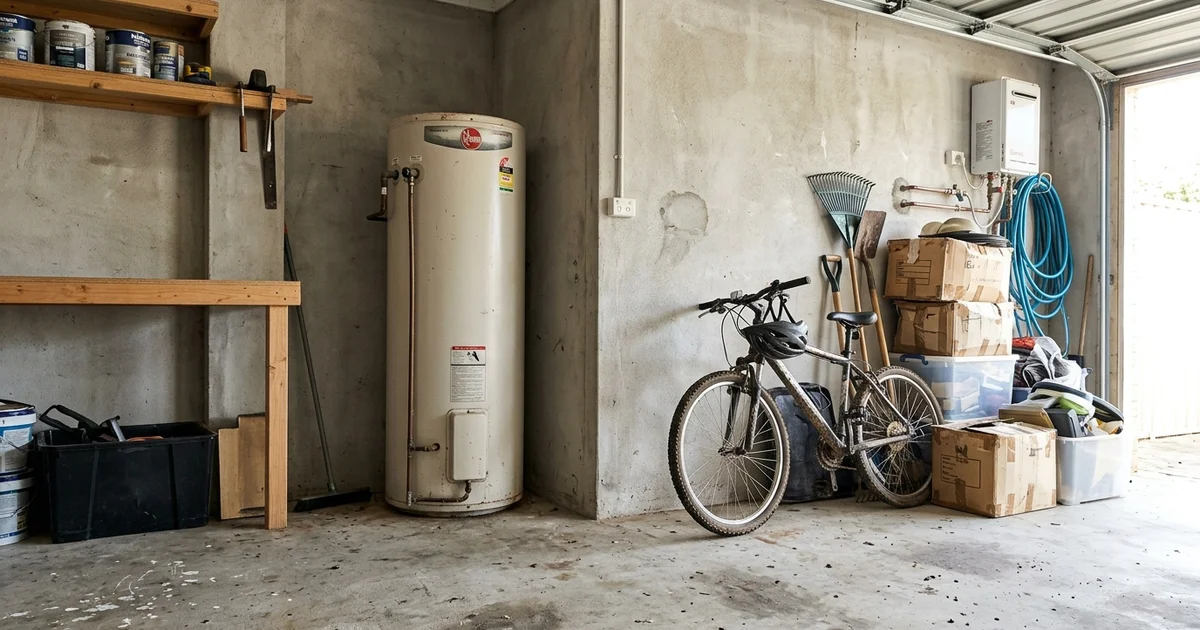
Storage heats a tank of water in advance and holds it at temperature. You draw from a reservoir that is already hot, and the element reheats what you used.
Instantaneous, also called instant or tankless electric, holds nothing. It heats water as it passes through, on demand, using a high-powered element in a compact unit.
Both do the job. The trade-offs differ substantially, and the right answer depends heavily on household size and whether you have access to an off-peak tariff.
Head to head
| Instantaneous electric | Electric storage | |
|---|---|---|
| Runs out | No, but output is limited | Yes, once drawn down |
| Standby loss | None | Continuous |
| Space | Very compact, wall-mounted | Substantial tank footprint |
| Electrical demand | Very high while running | Moderate, sustained |
| Off-peak tariff | Not compatible | Compatible, and often cheap |
| Upfront cost | Moderate, plus possible switchboard work | Lowest |
| Best fit | Point-of-use, small flats, single bathroom | Family homes, off-peak households |
The case for instantaneous electric
No standby losses. Nothing sits heated waiting to be used, so the only energy consumed is the energy that ends up in the water you actually use.
Very compact. A small wall-mounted unit takes essentially no floor space. In a flat, a granny flat, or a home where the old tank occupied a chunk of the laundry, that matters.
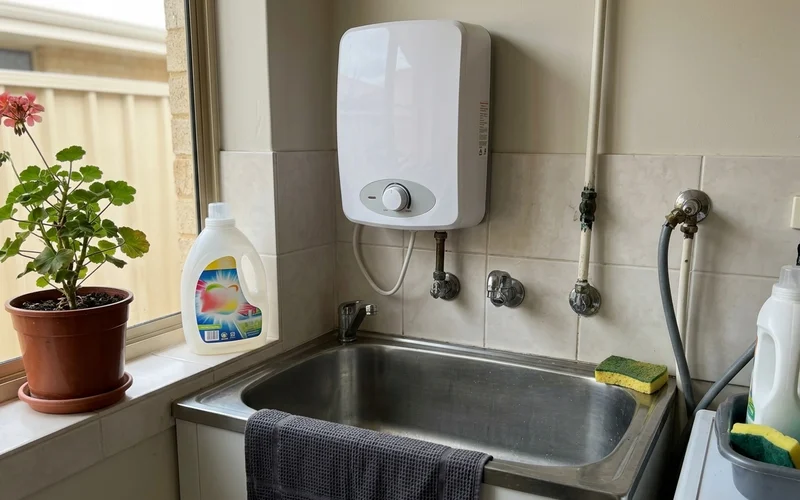
Point-of-use flexibility. A small instantaneous unit under a sink or above a laundry trough delivers hot water instantly at that outlet, with no dead leg of cold water in the pipe to run off first. That saves both water and waiting.
No anode rod, no sediment. There is no cylinder to corrode from the inside, so the main maintenance item of a storage system disappears.
The case for electric storage
Off-peak tariffs. This is the big one. On an off-peak circuit the element only fires during a cheap overnight window, which meaningfully reduces the cost of what is otherwise an inefficient way to heat water. Instantaneous units cannot do this, because they run whenever you open the tap, at whatever rate applies then.
Lower electrical demand. A whole-house instantaneous electric unit draws a lot of current while running. Many installations need a dedicated circuit and sometimes switchboard work, which adds cost. A storage tank draws less, over a longer period.
Handles simultaneous outlets better. A tank delivers its stored volume regardless of how many taps are open. An instantaneous unit’s output is fixed, so two showers at once means noticeably reduced performance from each.
Lowest upfront cost. A basic storage tank is the cheapest hot water system you can buy and install, which is exactly why it remains so common.
The Perth angle
Two things worth factoring in locally.
Inlet temperature. Instantaneous units have to raise incoming water to shower temperature in a single pass. Perth’s mains water is noticeably colder in July than February, so an instantaneous unit that performs adequately in summer can feel weak in winter. Size for winter.
Water hardness. Perth’s mineral content means scale. On storage systems, that means element scaling, sediment in the base and faster anode consumption. On instantaneous units, scale can build in the heat exchanger over time. Neither is a reason to avoid either type, but both are reasons to service regularly.
Which should you choose?
Choose instantaneous electric for a flat, a granny flat, a single-bathroom home with modest demand, or a specific point-of-use application like a laundry trough or a remote bathroom.
Choose electric storage for a family home, especially where an off-peak tariff is available and you can fit a large enough tank to carry a full day.
Choose neither if you have the option, honestly. Both are the most expensive ways to heat water available. If your budget stretches to it, a heat pump does the same job on roughly a third of the electricity, attracts the federal STC rebate, and is a storage system so it retains the simultaneous-outlet advantage.
We install, size and repair all electric hot water types across the Perth metro. See our electric hot water page, or our guide on sizing a hot water system before you commit to a capacity.