Sizing is the decision you live with
Of all the choices in a hot water replacement, capacity is the one that determines whether you are happy with the system in three years. Get it wrong in one direction and somebody gets a cold shower every morning. Get it wrong in the other and you pay standby losses every single day for a decade on volume you never use.
It is also the decision most often made badly, because the default is to match whatever was there before. That assumes the previous system was sized correctly for a household that may have looked nothing like yours.
Storage tank sizing by household
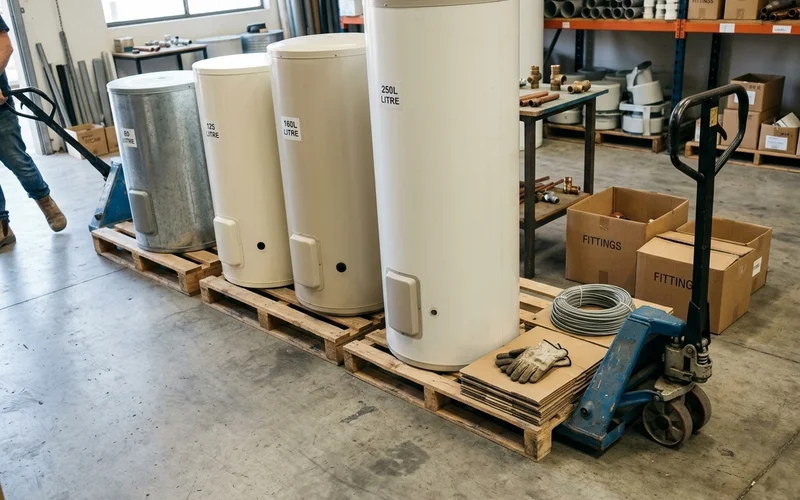
Storage systems are sized in litres, and the right number depends on both how many people live in the house and how the system is heated.
| Household | Electric (continuous tariff) | Electric (off-peak) | Gas storage |
|---|---|---|---|
| 1 - 2 people | 50 - 80 L | 125 - 160 L | 90 - 135 L |
| 3 - 4 people | 125 - 170 L | 250 - 315 L | 135 - 170 L |
| 5 - 6 people | 250 - 315 L | 315 - 400 L | 170 - 260 L |
Two things jump out of that table.
Gas storage needs less volume than electric for the same household. That is recovery rate. A gas burner reheats a tank far faster than an electric element, so the stored volume gets replenished during the day rather than having to last until the next heating cycle.
Off-peak electric needs substantially more volume. On an off-peak tariff the element only fires during a cheap overnight window, so the tank has to hold an entire day’s hot water. Putting a 160 litre tank on off-peak in a four-person house is a guaranteed complaint by dinner time.
Continuous flow is sized completely differently
Continuous flow units, also called instantaneous, do not store anything. They heat water as it passes through, so the constraint is not volume, it is flow rate, measured in litres per minute.
The question becomes: how many hot outlets do you realistically run at the same time?
| Flow rate | Handles | Typical fit |
|---|---|---|
| 16 L/min | One shower, or a shower and a basin | One-bathroom home or small unit |
| 20 L/min | Two showers, or a shower plus kitchen | Standard two-bathroom family home |
| 26 L/min | Two showers plus other outlets | Larger home, high simultaneous demand |
There is a Perth-specific wrinkle here. Achievable flow rate depends on how far the unit has to raise the water temperature, and Perth’s mains inlet temperature is noticeably colder in July than in February. A unit that feels adequate in summer can feel marginal on a cold winter morning, which is why we size with the winter figure rather than the headline one.
Peak demand matters more than headcount
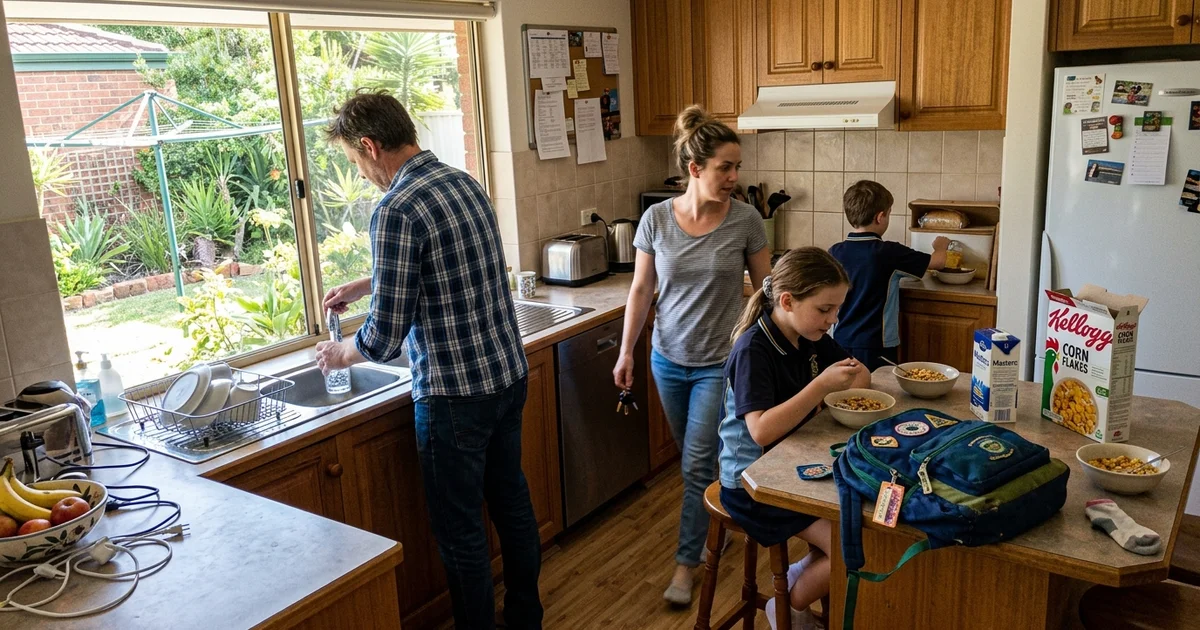
Household size is a starting point, not the answer. What actually determines whether a system copes is the peak: the busiest twenty minutes of your day.
Three people who shower one after another at wildly different times need far less capacity than three people who all shower between 7:00 and 7:20 while the washing machine runs. A large family who shower in the evening, spread out, put less strain on a system than a small household who all rush out at once.
Things worth counting when you size:
- How many bathrooms, and whether they get used simultaneously
- Whether anyone takes long showers, which matters far more than headcount
- Whether the washing machine or dishwasher draws hot water
- Whether you have a bath that gets filled regularly, since a bath can be 100 to 150 litres in one go
- Guests, teenagers, and how the household will look in five years
That last one is worth a thought. A system installed today will still be there when the kids are teenagers, and teenage showering habits are a genuine engineering load.
Where oversizing costs you
An oversized storage tank is not a free safety margin. The cylinder radiates heat through its walls continuously, and the element or burner keeps topping it up. On an electric system that standby loss is money leaving the meter every hour of every day, whether anyone showers or not.
Continuous flow units do not have this problem, since they only fire on demand, which is one of their genuine advantages. If you are weighing that trade-off, our guide comparing storage versus continuous flow covers it in detail.
Get it checked rather than guessed
The honest answer is that a five-minute site conversation beats any table. We ask about bathrooms, timing, household size now and likely later, then look at your existing supply and available space before recommending a capacity.
That happens as part of the free quote on our hot water system installation service, and it costs nothing to have someone size it properly before you commit to a decade with the result.