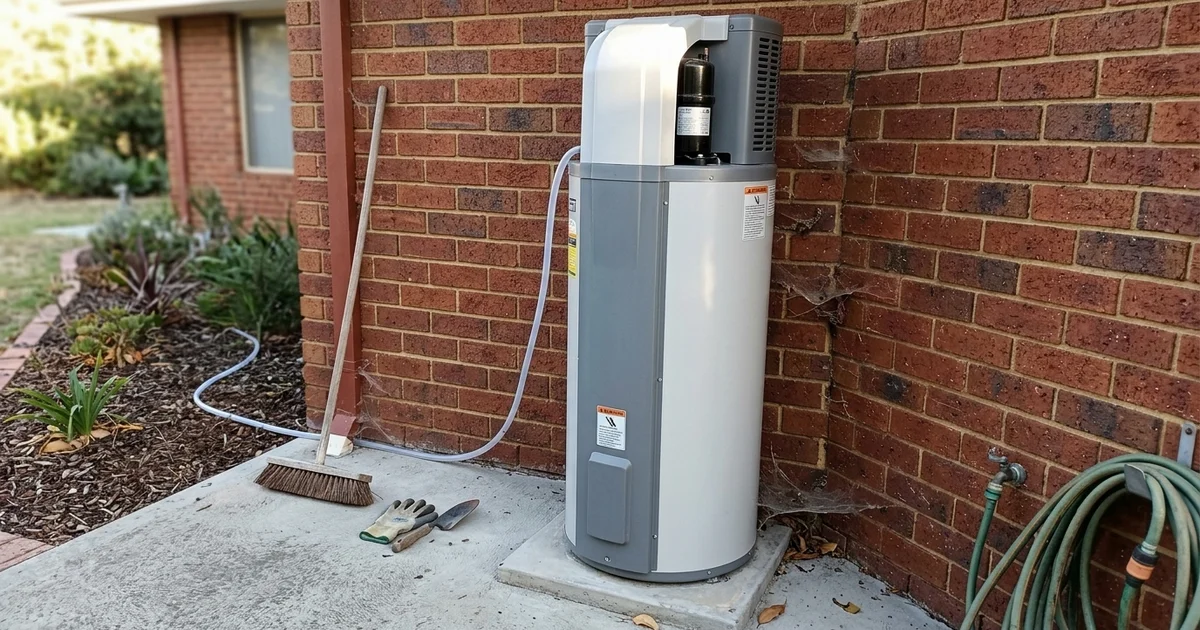
Moving heat instead of making it
A conventional electric hot water element converts electricity into heat at one to one. One unit of electricity in, one unit of heat out. That is the physical ceiling, and no element can beat it.
A heat pump does something different. It does not create heat, it relocates it. There is already a large amount of thermal energy in the air around your house, even on a cool Perth morning. A heat pump collects that energy and concentrates it into your water.
The measure of this is the Coefficient of Performance, or CoP. A heat pump with a CoP of 3 delivers three units of heat for every unit of electricity consumed. Modern units typically achieve three or better, which is why they use roughly a third of the electricity of an element for the same hot water.
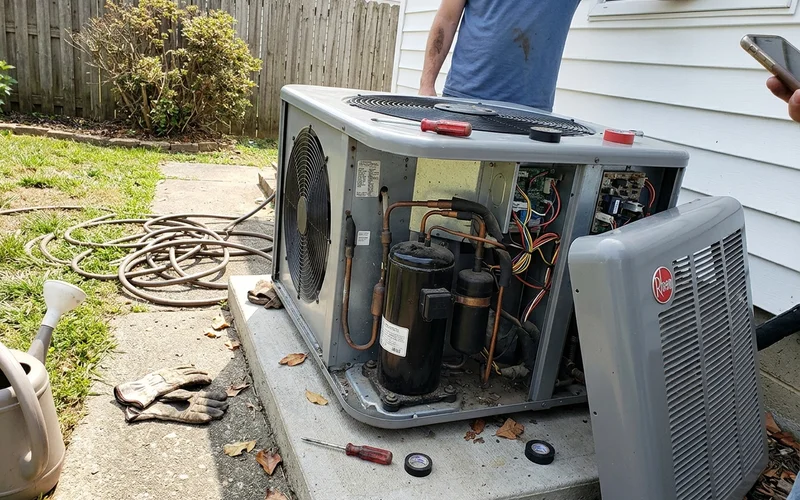
The cycle, step by step
1. The fan draws air across the evaporator. Ambient air passes over a coil containing cold liquid refrigerant.
2. Refrigerant absorbs heat and evaporates. The refrigerant boils at a very low temperature, so even cool air is warm enough to make it evaporate into a gas, taking the air’s heat energy with it.
3. The compressor raises the temperature. Compressing a gas raises its temperature. The compressor takes low-grade heat from the air and concentrates it into a smaller volume at a much higher temperature, useful for heating water.
4. Heat transfers to the water. The hot refrigerant gas passes through a condenser in contact with the water in the tank, giving up its heat and condensing back to liquid.
5. Expansion, and repeat. The refrigerant passes through an expansion valve, drops in pressure and temperature, and returns to the evaporator to start again.
Air comes out of the unit noticeably cooler than it went in, which is the visible evidence that heat has been extracted from it.
Refrigerants and why they matter
Two refrigerants dominate the current market, and they behave differently.
R290 (propane) is used in most integrated heat pump units. It has excellent thermodynamic properties, a very low global warming potential, and works well across the temperature range Perth sees.
CO2 (R744) is used in premium split systems from brands such as Sanden and Reclaim Energy. It achieves higher water temperatures efficiently and holds its CoP better in cold conditions. These systems typically cost more and deliver the best running cost over time.
Older units used synthetic refrigerants with high global warming potential. If you are replacing a first-generation heat pump, the modern equivalents are meaningfully better on both efficiency and environmental impact.
Placement: the practical constraint
A heat pump needs three things from its location.
Airflow. The fan needs to draw air in and exhaust cooler air out without recirculating. Corners, tight alcoves and enclosed cupboards do not work. Manufacturer clearances vary, but a reasonable air gap on the intake side is essential.
Distance from bedroom windows. The unit produces a low fan and compressor hum while running, similar to an outdoor air conditioner. It is not loud, but it is audible, and directly under a bedroom window is the wrong place. This is the single most common regret we hear about heat pumps, and it is entirely avoidable at the planning stage.
Somewhere for condensate to drain. Extracting heat from air condenses moisture out of it, exactly like an air conditioner. That water has to go somewhere sensible.
Most properties have an obvious spot that satisfies all three. Where the obvious location fails on noise, relocating with additional pipework is usually worth the cost.
Timers and solar PV
Heat pumps work best when they run during the warmest part of the day, because warmer intake air means a higher CoP. That is convenient, because it is also when rooftop PV is generating.
Setting the heating cycle to run during the middle of the day means the unit uses your own solar electricity rather than purchased power, and operates at its most efficient. For a household with PV, that combination gets hot water close to free for much of the year.
We set the timer as part of commissioning, and it is worth revisiting if your circumstances change.
Backup and reliability
Every heat pump includes an electric element as a backup for extreme conditions or unusually high demand. In Perth’s climate it rarely engages. If yours is running the element frequently, something is wrong: a refrigerant issue, a fault in the compressor, or a timer set so tightly the heat pump cannot keep up.
Service life is typically 10 to 15 years, with the compressor the key component. As with any storage system, the sacrificial anode rod in the tank matters in Perth’s harder water and is worth checking around every five years.
For installation and servicing across the Perth metro, see our heat pump hot water page. For what the rebate is worth, read our guide on WA heat pump rebates and STCs.