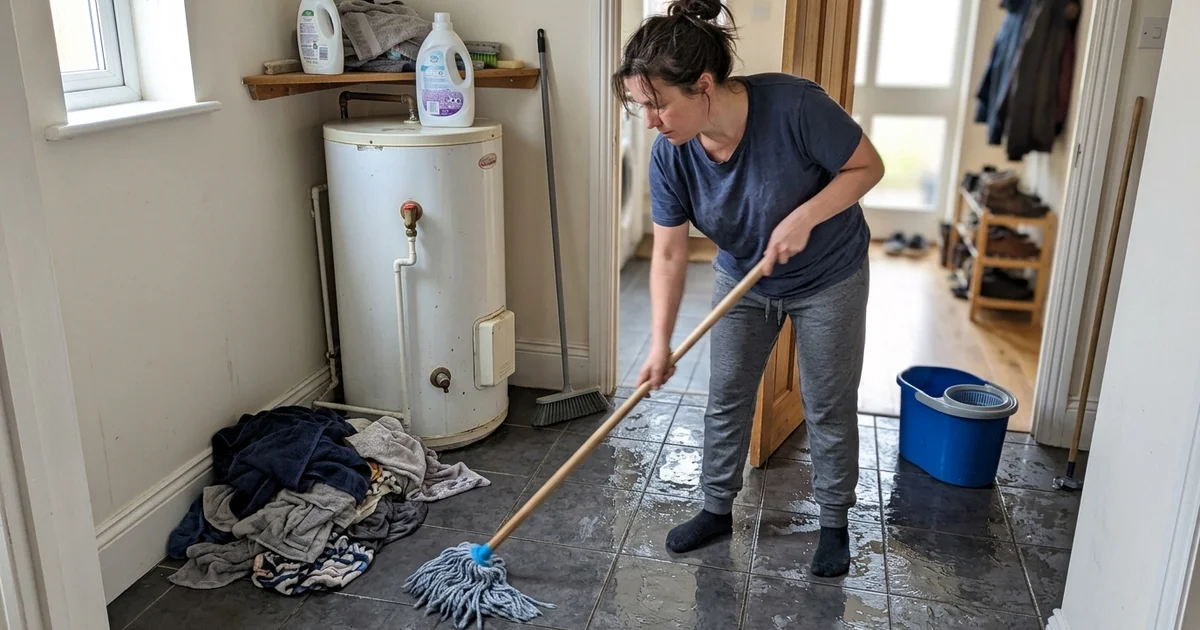
The first sixty seconds
A burst hot water tank releases its entire stored volume, and then keeps releasing whatever the mains feeds it. A 250 litre tank empties fast, and the mains does not stop. Speed matters here more than anything else you do today.
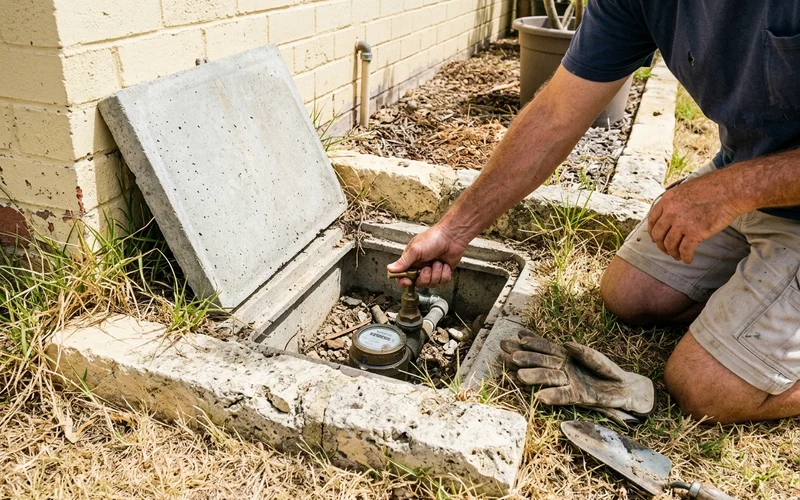
Shut the water off. The cold water isolation valve at the top of the unit is the right one, because it stops the tank refilling without cutting the whole house. If you cannot find it, cannot reach it, or it will not turn, go straight to the main stop valve at the front of the property near the meter and shut the lot.
Cut the energy. Electric system: switch off the breaker labelled hot water, HWS or water heater at your switchboard. Gas system: close the gas isolation valve at the unit. This stops the system trying to heat a tank that is emptying, which is both a waste and a hazard.
Stay clear of the water. This is the step people skip. Water from a failed hot water system can be scalding for a long time after the energy is isolated. Do not wade in barefoot, and keep children and pets out of the area entirely.
Then call. Our emergency hot water repairs team dispatches 24/7 across the Perth metro, and a burst tank is the highest priority job we run.
Containing the damage while you wait
Once the supply is off, the flow stops, but there is still whatever escaped to deal with. What you do in the next twenty minutes affects the repair bill more than most people realise.
Move belongings out of the path of the water. Boxes on garage floors, anything stored against the wall behind the unit, and anything on carpet. Cardboard wicks water upward, so lift boxes rather than pushing them aside.
Divert rather than absorb. Towels are fine for small volumes, but for anything substantial, opening a door and creating a path outside works better than trying to soak up a tank’s worth of water.
Lift floor coverings if you safely can. Rugs and mats trap water against the floor beneath.
Get air moving. Once the water is off and the area is safe, open doors and windows and run a fan. Drying speed matters for timber, plasterboard and skirting.
Photograph everything. Before you clean up. Photos of the failed unit, the water and any affected belongings make an insurance claim considerably easier.
What we do when we arrive
The first job is confirming the failure and making the site safe. Then we assess whether the cylinder has genuinely failed or whether the water came from a valve or fitting, since a dramatic-looking leak is occasionally a failed pressure temperature relief valve rather than the tank itself.
If the cylinder has burst, that is a replacement. There is no repair for a corroded tank wall, and anyone offering one is not doing you a favour.
We quote the replacement in writing on site, including removal and recycling of the failed unit. Where stock allows, we can often complete a same-day changeover. Where your specific model needs ordering, we can usually arrange a temporary hot water solution so the household is not left waiting without any hot water at all.
Why tanks burst
Almost always the same story: the sacrificial anode rod was consumed years earlier and never replaced, so the corrosion moved to the steel cylinder. The tank thins from the inside over years, and eventually a weak point gives under mains pressure.
Contributing factors include Perth’s water hardness, which accelerates anode consumption, a thermostat set higher than necessary, sediment build-up in the base, and simply age. Most storage tanks in Perth run 8 to 12 years.
The warning signs usually arrive first: rusty or discoloured hot water, damp ground under the unit, staining on the wall behind. If you are reading this after the fact, it is worth knowing for the next system that a $150 anode check every five years is the cheapest insurance available against exactly this.
Insurance
Home and contents policies commonly cover water damage resulting from a burst appliance, even where they exclude the appliance itself. Read your policy wording, or call your insurer before disposing of anything.
We can provide documentation of what failed and the condition of the unit, which is generally what an assessor asks for.